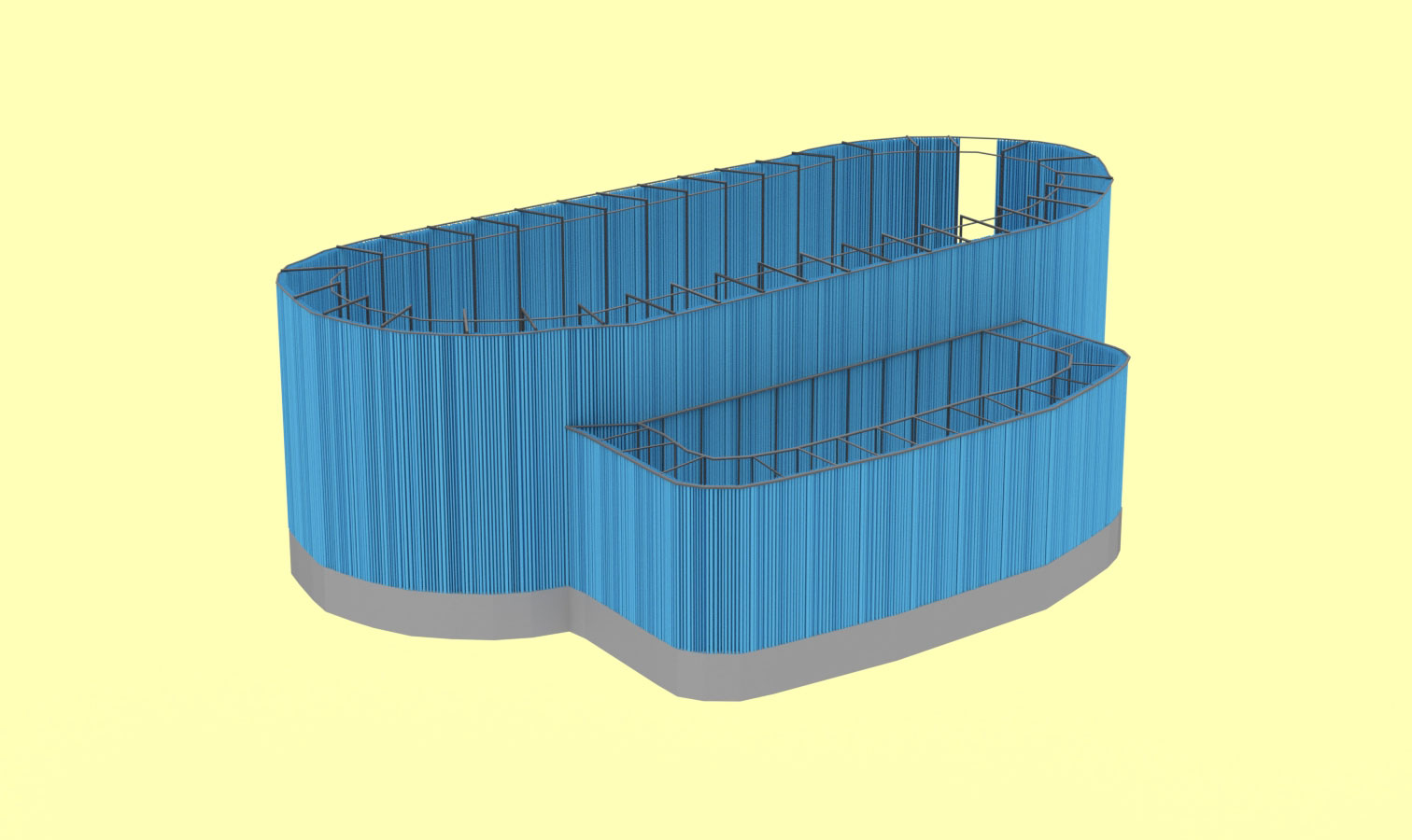
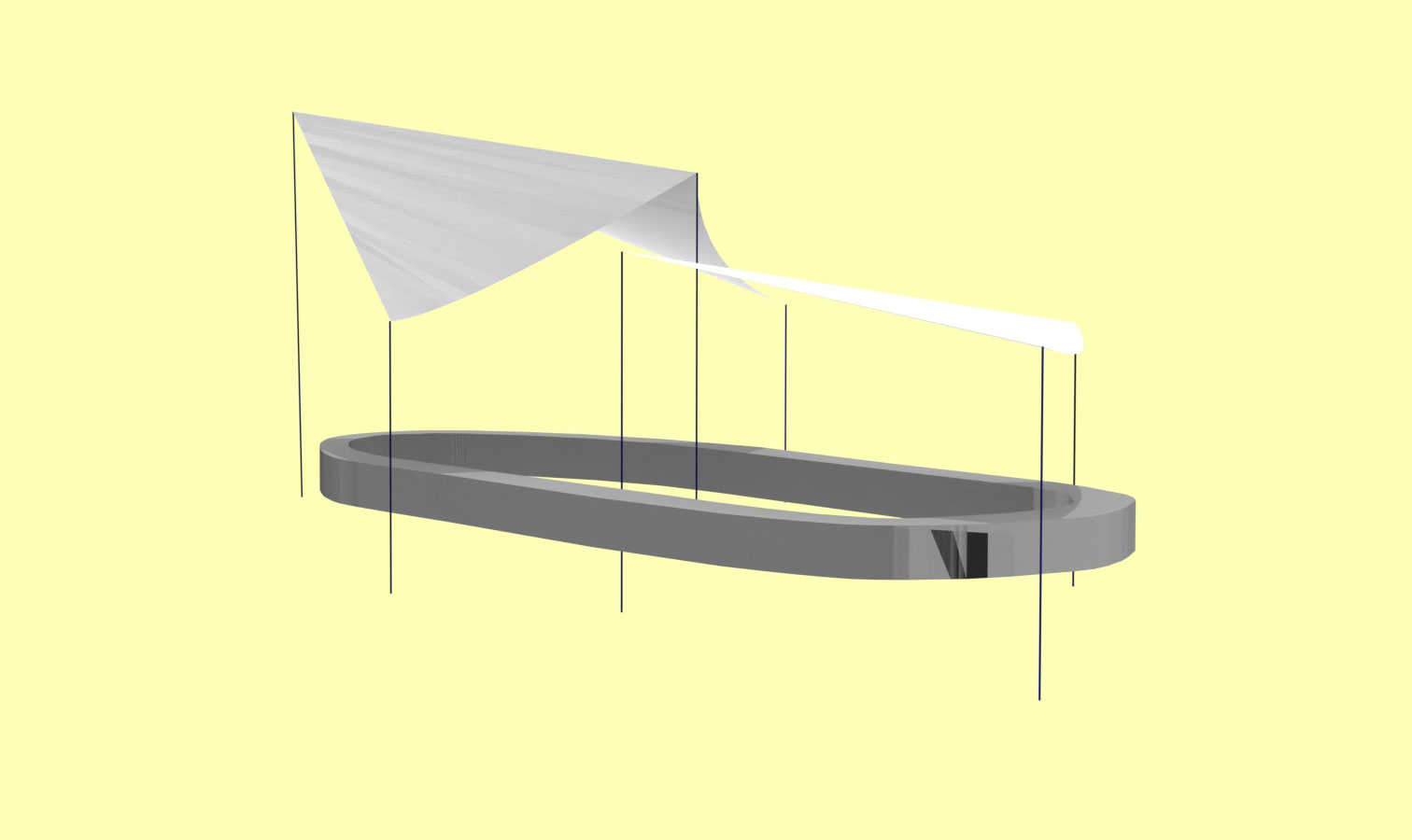
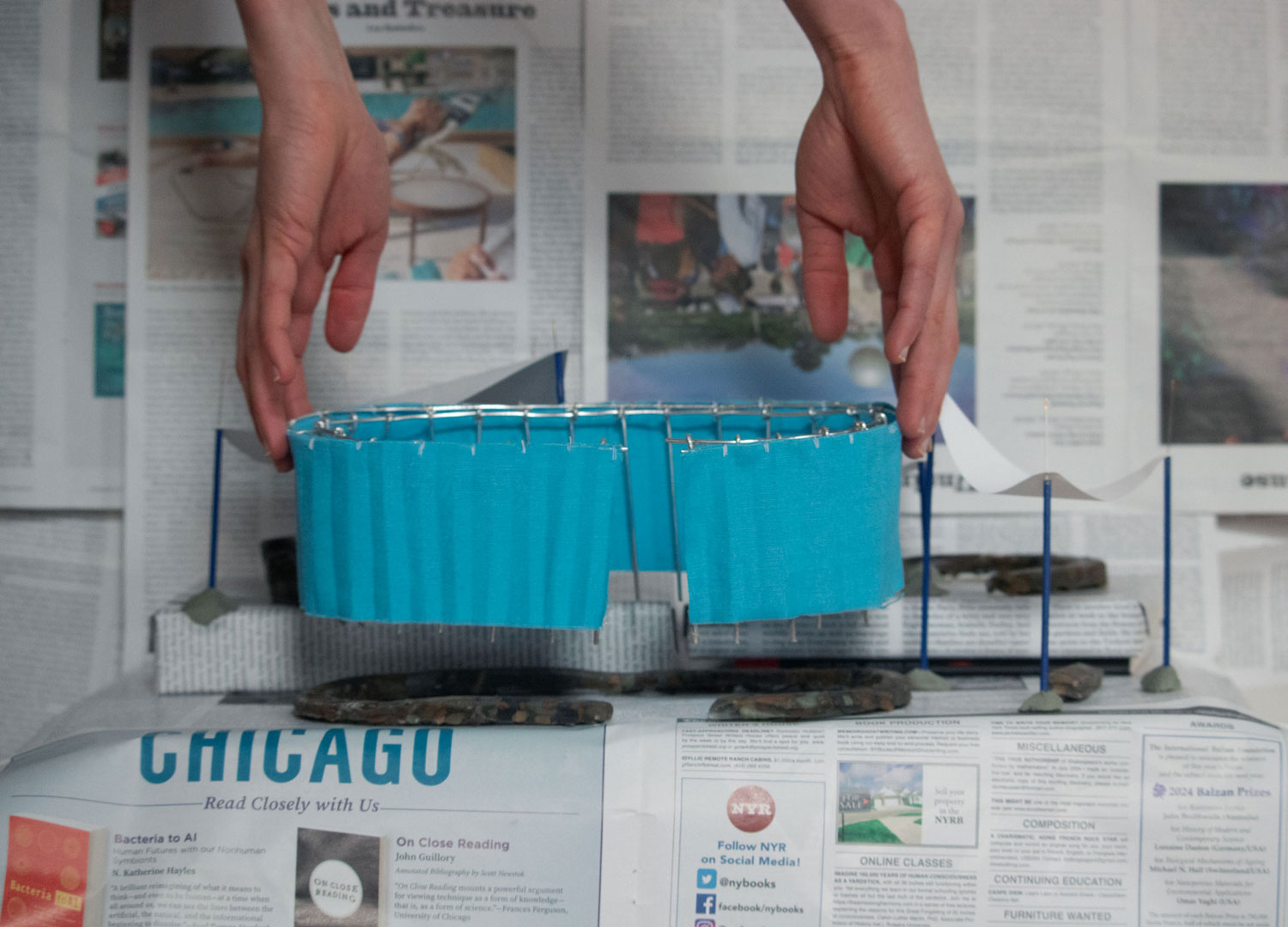
Castro de Baroña is a Celtic Iron Age settlement situated at the edge of the westernmost region of Spain. Archaeologists speculate that the space held some form of sacred meaning for the Galician Celts. Today it is a roadside attraction where the sound of the sea mingles with the buzz of drones. The driving idea of this project is to reimagine our relationship to history— a simultaneous regression and movement forward, westward.
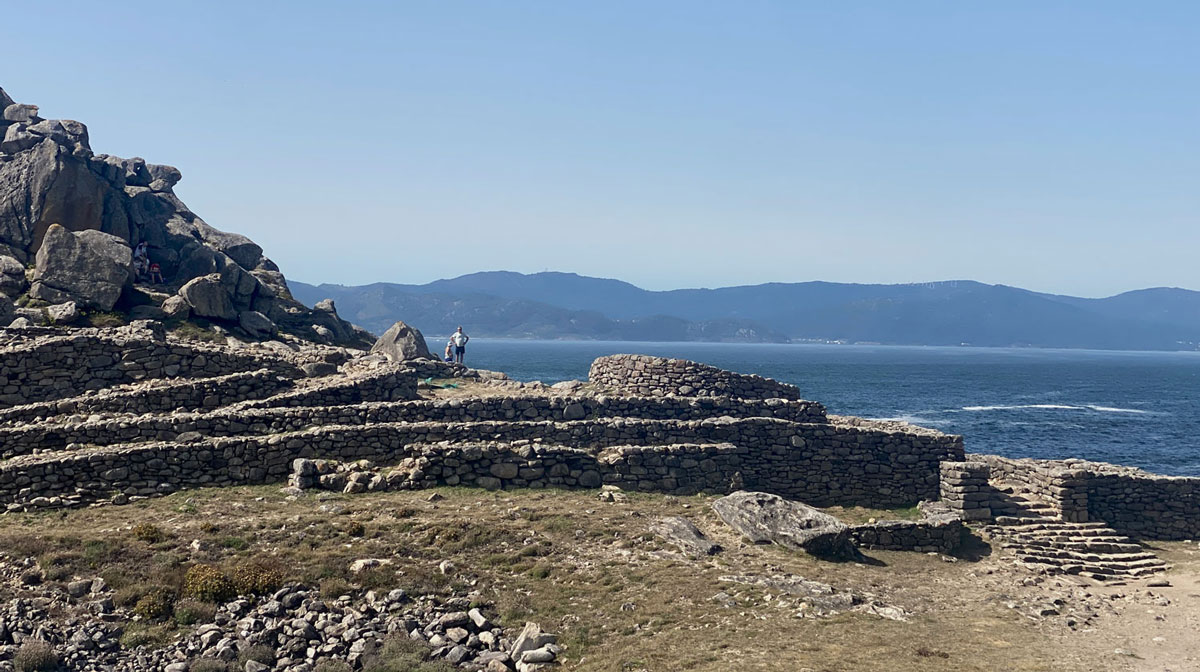
On a trip down the coast of Chile, Carlos Fuentes heard a group of fishermen singing a poem by Neruda. When he asked them who wrote it, they responded that nobody had. Like the poem, this project is meant to become anonymous over time, to allow the site to be altered and rearranged so often that it no longer is thought of as a prosthesis on the ruins, but as a natural extension of the surviving walls—as mundane and authorless as an umbrella on a beach day, or as the ruins themselves. Through multiple iterations of manipulating rhythm and proportions, the angles best suited to the site became apparent. Each additional triangle contributes to the sense of a unified whole even as it introduces a rupture.
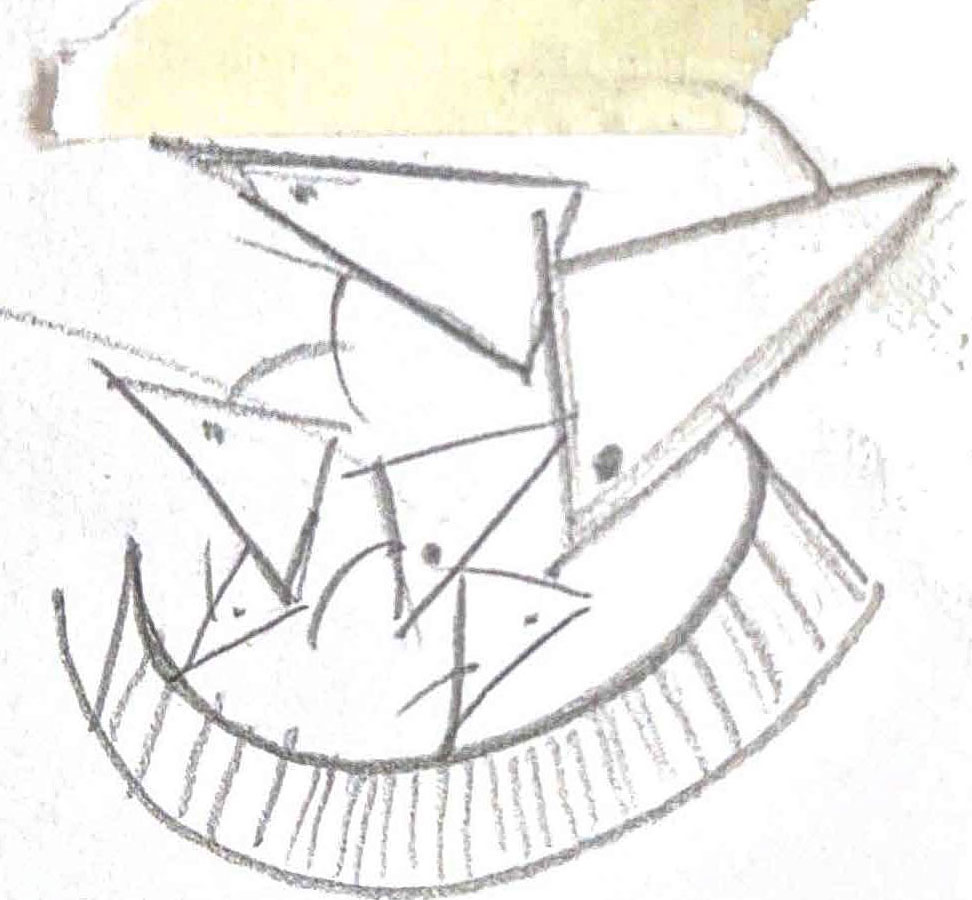
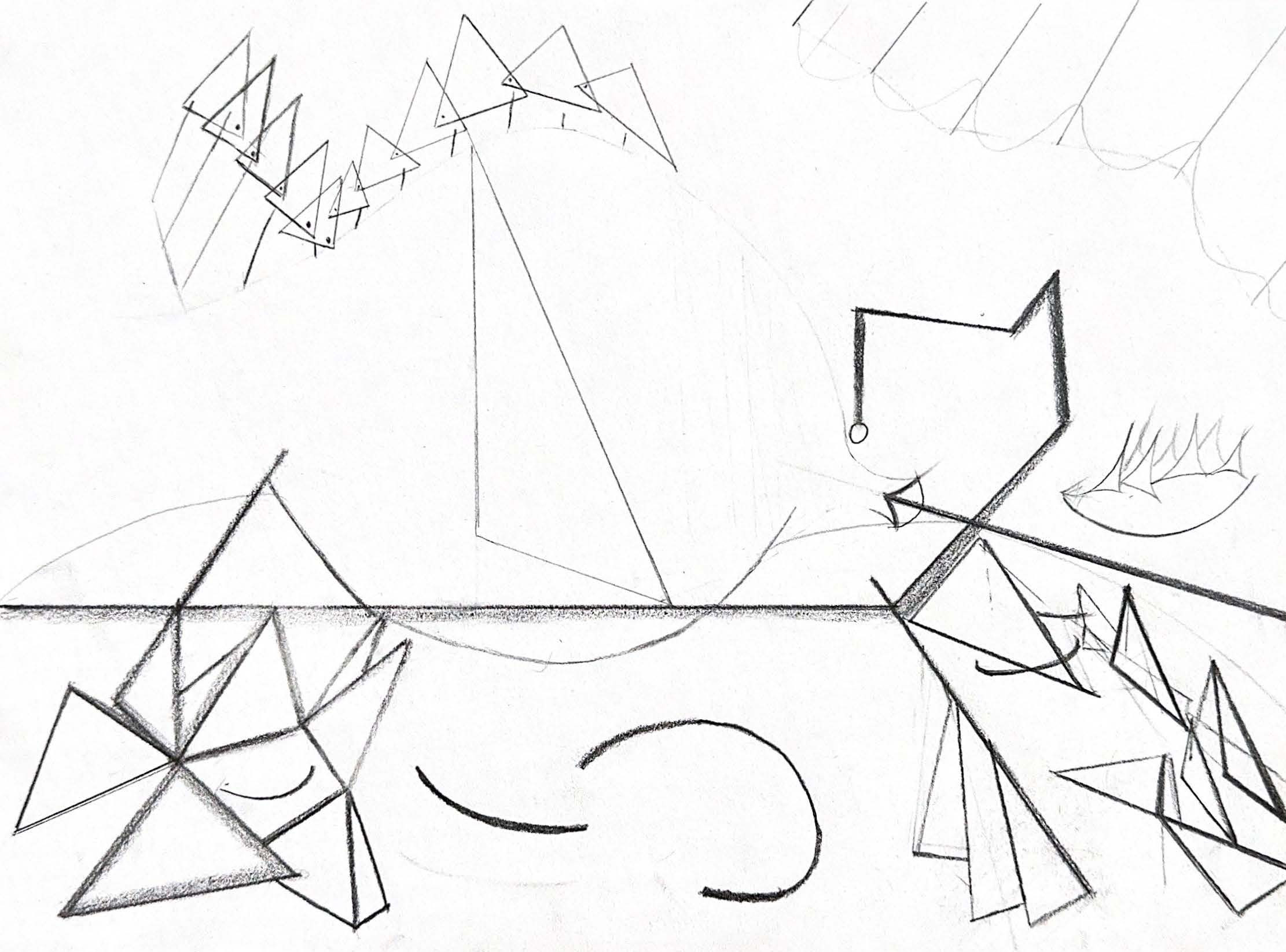
This project became a question of levels and layers: thinking through how to best mediate the terrain and ruins. Then the question became how to square the topography with the elements necessary to make the beach a useable public space, i.e., providing shelter from the sun, protection from the wind, and privacy from others.
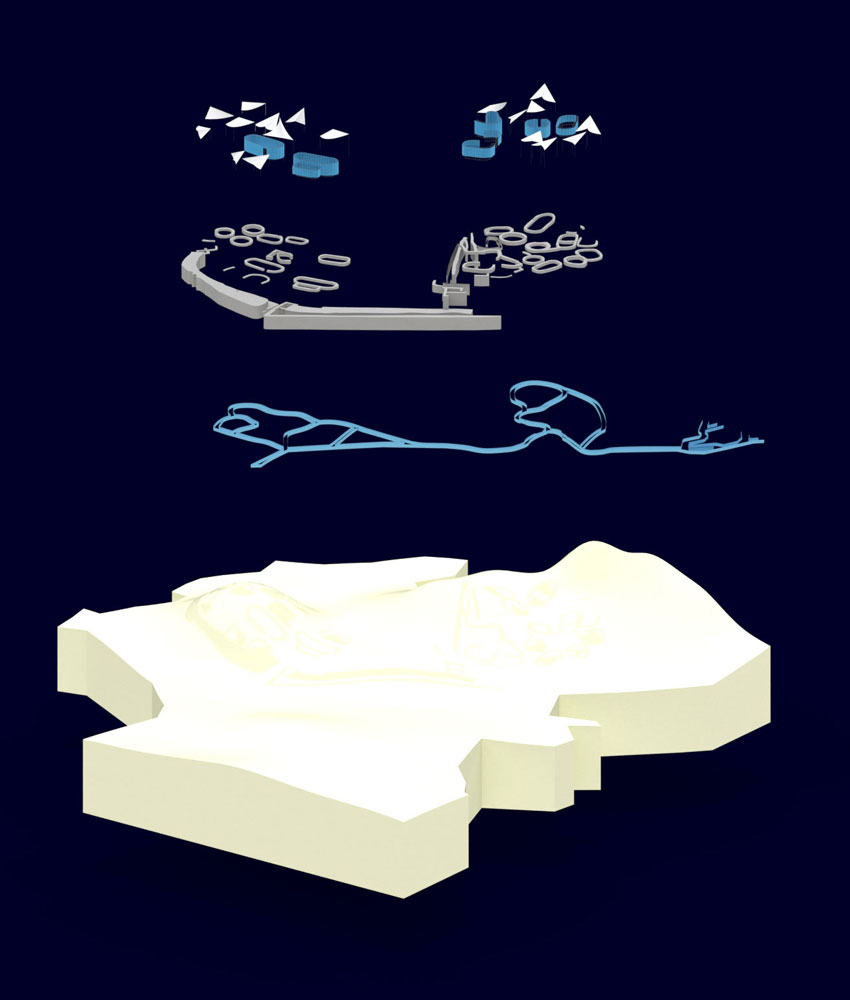
Each part can be just as easily removed as it was installed, leaving only small holes in the ground. Except for the curtains' fabric, the proposed structures do not make contact with any of the original stone.